
Aquinas: Robb Moser
Genesis to Revelation Bible Blogs

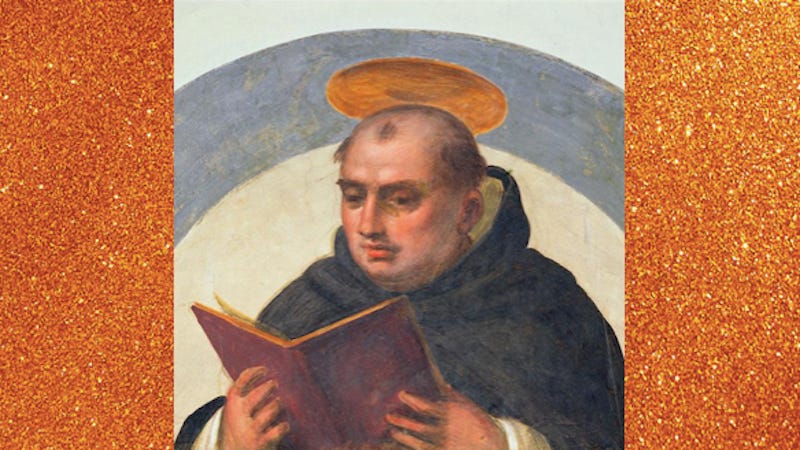
Thomas Aquinas (1225 – 1274) was an Italian Dominican friar and priest who became one of the most influential philosophers and theologians in Western history. Known as the“Angelic Doctor” he is celebrated for synthesizing Aristotelian philosophy with Christian principles, a school of thought known as Thomism.
Core Contributions
Faith and Reason: Aquinas famously argued that faith and reason are compatible and originate from the same divine source. He believed that while some truths (like the Trinity) require revelation, others (like the existence of God) can be proven through natural reason.
The Five Ways: In his masterwork, he proposed five logical arguments for God’s existence, often called the “Five Ways”. These include arguments from motion, causation, and design.
Natural Law: He developed a theory of Natural Law, positing that humans have an innate rational ability to discern good from evil, which participates in God’s eternal law.
Major Works:
Summa Theologiae: A massive, unfinished compendium intended to summarize all Catholic theology for beginners.
Summa contra Gentiles: A work of natural theology aimed at explaining Christian truths to non-believers.
Eucharistic Hymns: He composed famous liturgical texts such as the Pange Lingua (including the Tantum Ergo) and Panis Angelicus.
Life and Legacy
Early Resistance: Born to a noble family, he defied their wishes to join the then-radical Dominican Order. His family kidnapped and imprisoned him for a year to stop him, but he eventually escaped to pursue his vocation.
The “Dumb Ox”: While studying under Albert the Great in Cologne, his quiet nature led classmates to call him a “dumb ox.” Albert famously prophesied that his “bellowing” would one day be heard throughout the world.
The “Straw” Vision: Near the end of his life, Aquinas experienced a profound mystical vision. Afterward, he stopped writing, saying, “All that I have written seems like straw to me compared to what has now been revealed”.
Veneration: He was canonized in 1323 and declared a Doctor of the Church in 1567. He is the patron saint of students, teachers, and Catholic universities.