
Knox: Robb Moser
Genesis to Revelation Bible Blogs

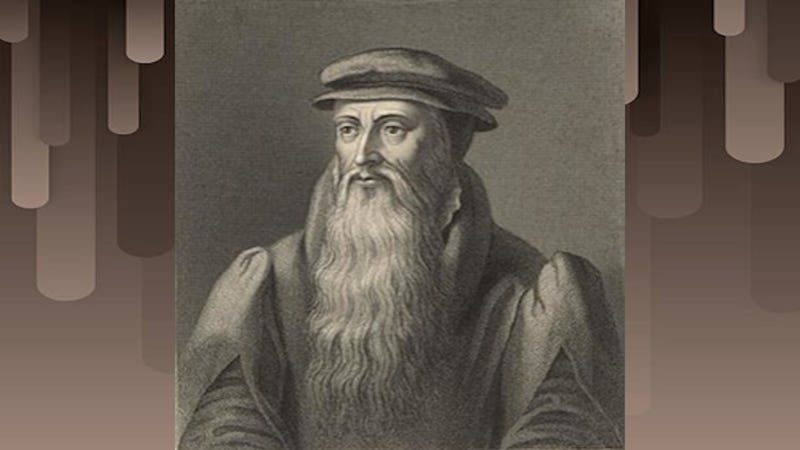
John Knox (1514 – 1572) was a Scottish minister and theologian who served as the primary leader of the Scottish Reformation and the founder of the Presbyterian Church of Scotland. Known as the “Thundering Scot” he was a fiery preacher whose uncompromising stance against Catholic practices and monarchical authority fundamentally shaped Scotland’s religious and political identity.
Life and Key Events
Early Life & Conversion: Born in Haddington, Knox was originally ordained as a Catholic priest. He converted to Protestantism under the influence of George Wishart, for whom he served as a bodyguard.
Capture and Slavery: After the assassination of Cardinal Beaton, Knox joined the Protestants at St. Andrews Castle. In 1547, the castle fell to French forces, and Knox was sentenced to 19 months as a galley slave, an experience that permanently damaged his health but solidified his resolve.
Exile in England and Geneva: Upon his release, he served as a royal chaplain to King Edward VI in England. Following the ascension of the Catholic Queen Mary I (”Bloody Mary”), he fled to Geneva, where he became a close associate of John Calvin and learned the tenets of Reformed theology.
The Scottish Reformation: Knox returned to Scotland for good in 1559. His powerful preaching incited widespread reform, leading the Scottish Parliament to officially adopt Protestantism in 1560.
Conflict with Royalty: Knox is famous for his antagonistic interviews with Mary, Queen of Scots, whom he publicly rebuked for her Catholic faith and marriage choices. He also wrote the controversial The First Blast of the Trumpet Against the Monstrous Regiment of Women, arguing against female monarchs.
Enduring Legacy
Religious Founder: He established the Presbyterian form of church government, which relies on a democratic structure of elders rather than a hierarchy of bishops.
Social Reform: He advocated for a national system of education and poor relief, envisioning a literate populace capable of reading the Bible themselves.
Political Philosophy: Knox laid the groundwork for the right of subjects to resist “ungodly” or tyrannical rulers, a concept that later influenced the American Revolution and figures like Thomas Jefferson.
Final Resting Place: Knox died in Edinburgh and was buried in the churchyard of St. Giles’ Cathedral. Today, his exact grave site is believed to be beneath parking space number 23 in the cathedral’s former cemetery.