
Origen: Robb Moser
Genesis to Revelation Bible Blogs

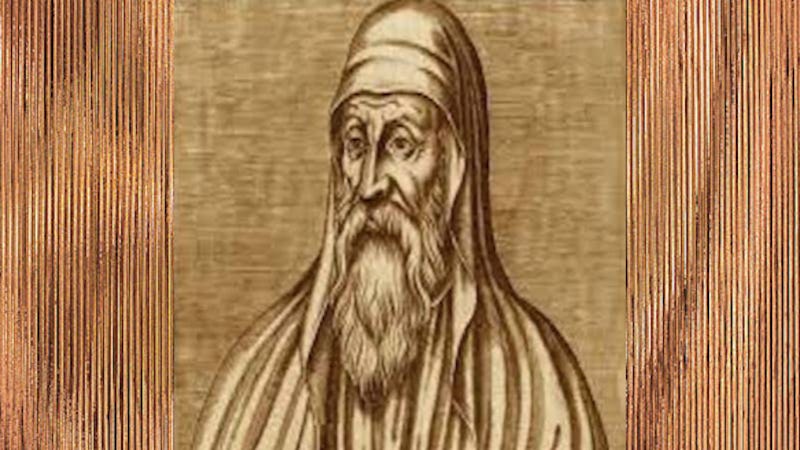
Origen of Alexandria (185 – 254 AD), also known as Origen Adamantius, was one of the most prolific and influential theologians, biblical scholars, and philosophers of the early Christian Church. Often called the “first genius” of the church, he is credited with creating the first system of Christian theology and pioneering the field of textual criticism.
Life and Ministry
Early Life: Born into a devout Christian family in Alexandria, Egypt, Origen was the eldest of several children. In 202 AD, his father, Leonides, was martyred during the persecution under Emperor Septimius Severus. Tradition holds that a young Origen wanted to turn himself in for martyrdom as well, but his mother hid his clothes to prevent him from leaving the house.
Catechetical School: At age 18, Bishop Demetrius appointed him head of the Catechetical School of Alexandria. To avoid scandal while teaching women and to strictly follow a literal reading of Matthew 19:12, Origen famously (though controversially) castrated himself—an act he later expressed regret for in his writings.
Move to Caesarea: After a fallout with Bishop Demetrius over his ordination by Palestinian bishops, Origen relocated to Caesarea Maritima in 231 AD. There, he founded a new theological school and library that became a major center of learning.
Death: During the Decian persecution (250 AD), Origen was imprisoned and brutally tortured. Although he was released after the emperor’s death, his health was broken, and he died from his injuries a few years later in Tyre.
Major Works
Origen wrote roughly 2,000 treatises (some sources suggest as many as 6,000) covering almost every aspect of theology:
The Hexapla: A massive comparative edition of the Old Testament, displaying the Hebrew text and five different Greek translations in parallel columns.
On the First Principles (De Principiis): The first systematic exposition of Christian doctrine, outlining the nature of God, the soul, and free will.
Contra Celsum (Against Celsus): A landmark work of Christian apologetics defending the faith against the pagan philosopher Celsus.
Biblical Exegesis: He produced hundreds of homilies and commentaries, famously advocating for an allegorical interpretation of Scripture to find deeper spiritual meanings.
Theological Controversies and Legacy
Despite his brilliance, several of Origen’s speculative ideas led to posthumous charges of heresy:
Pre-existence of Souls: The belief that human souls existed as pure intellects before being embodied on Earth.
Apokatastasis (Universal Restoration): The hope that all rational beings, including potentially Satan, would eventually be reconciled to God.
Subordinationism: A view that the Son is eternally subordinate to the Father, which predated the formal definition of the Trinity at Nicaea.
Origen was formally condemned as a heretic by the Second Council of Constantinople in 553 AD. However, his intellectual legacy remains foundational to Western and Eastern theology, influencing figures like St. Athanasius and the Cappadocian Fathers.
For further reading, you can find a detailed biography and analysis of his philosophy on the Stanford Encyclopedia of Philosophy and the Internet Encyclopedia of Philosophy.