
Wolves: Robb Moser
Genesis to Revelation Bible Blogs

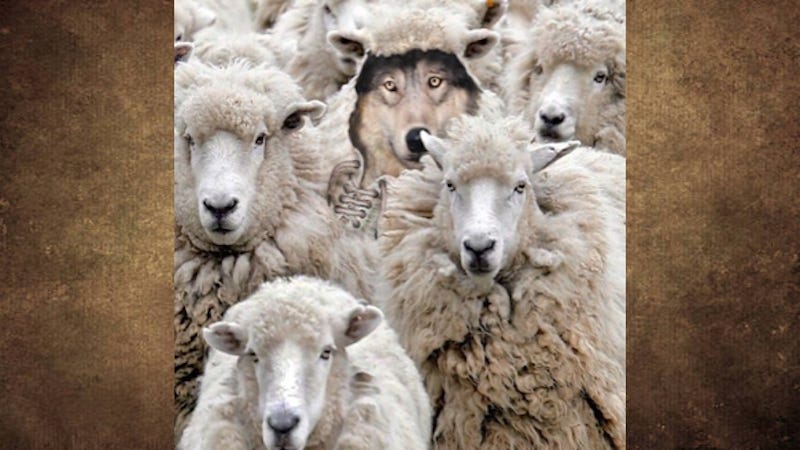
The Bible makes it clear that false teaching is not just a problem of the past but a present and ongoing danger. Jesus Himself warned, “Beware of false prophets, who come to you in sheep’s clothing but inwardly are ravenous wolves” (Matthew 7:15).
Similarly, the apostle Paul admonished the elders in Ephesus, saying, “I know that after my departure fierce wolves will come in among you, not sparing the flock” (Acts 20:29). These warnings are not just historical; they were given for the benefit of the entire church, including us today.
Scripture instructs believers to “test the spirits to see whether they are from God, for many false prophets have gone out into the world” (1 John 4:1). Furthermore, Paul urged the church to “mark those who cause divisions and create obstacles contrary to the doctrine that you have been taught; avoid them” (Romans 16:17). These passages make it clear that identifying and exposing false teaching is a biblical responsibility.
It’s not merely about having a “list” but about being faithful to the biblical mandate to protect the flock from dangerous teachings that distort the gospel and lead people astray. The gospel is a precious treasure that we are commanded to guard and proclaim accurately (2 Timothy 1:14). Part of this guarding involves exposing teachings and teachers that compromise its purity.
Many ask whether it is difficult to discern false teachers or if the gospel is so confused today. In many ways, both are true. False teachers are often subtle in how they distort the gospel, mixing truth with error in ways that make their teachings appear attractive or even biblical.
As Paul wrote in 2 Corinthians 11:13-15, false teachers “disguise themselves as apostles of Christ,” and “even Satan disguises himself as an angel of light.” This makes it challenging for many believers to distinguish truth from error, especially when false teachings are often presented in a way that sounds loving, empowering, or biblical.
In today’s culture, there is an overwhelming flood of voices claiming to represent the Christian faith, but many of these voices preach a gospel that is diluted, distorted, or outright heretical. Prosperity theology, legalism, universalism, and New Age spirituality cloaked in Christian terminology are just a few examples of how the gospel is being confused and corrupted in our time. Without careful discernment and guidance, many believers can be easily led astray.
The role of shepherds, teachers, and believers is to protect the flock and to equip the saints for the work of ministry, for building up the body of Christ (Ephesians 4:12). Part of that equipping involves teaching the truth and exposing error so that believers are not “tossed to and fro by the waves and carried about by every wind of doctrine, by human cunning, by craftiness in deceitful schemes (Ephesians 4:14).
Creating a list of false teachers is not about being judgmental or divisive; it’s about caring for the spiritual well-being of others. Just as a shepherd warns the flock of wolves lurking nearby, faithful Christians have a duty to warn others about teachings that undermine the gospel.
When believers are aware of these dangers, they are better equipped to stand firm in their faith and to recognize when the truth is being compromised.
Finally, having such a list serves as a tool to encourage discernment and a love for the truth. It’s a call to all believers to be like the Bereans, who “received the word with all eagerness, examining the Scriptures daily to see if these things were so” (Acts 17:11).
In an age where false teachings can be easily accessed through books, social media, and even churches, helping others identify unbiblical teachings helps them grow in their understanding of God’s Word and keeps them anchored in the true gospel.
Click on the names below to learn more about why they are listed and the specific ways they depart from Christian orthodoxy.